Flags can be powerful symbols of identity and pride, representing nations, communities, and organizations. They are often full of cultural heritage, encompassing the traditions, customs, and symbols of diverse communities and societies.
Flags have been used throughout history as a method of communication and signaling, conveying messages, warnings, and allegiances.
From the choice of colors to the inclusions of emblems, each flag tells a unique story (Harrison Flagpoles, 2024).
What is a flag?
Flag is usually rectangular piece of fabric of distinctive design that is used as a symbol (as of a nation), as a signaling device, or as a decoration (Merriam Webster Dictionary).
Brief in Origins of Flags
The earliest known use of flags dates back to ancient Egypt around 3,000 BCE. The Egyptians utilized flags as military standards and markers representing gods and deities. Similarly, ancient Chinese armies employed flags as early as 2000 BCE, using them to identify military units with animal symbols (Impact Flags, 2023).
The eventual proliferation of Chinese silk in East Asia allowed armies and other groups of people to begin producing actual flags from cloth. The Silk Road, the ancient trade route connecting East Asia to West Asia and Europe, brought Chinese silk to people in the West. Cloth flags became especially popular in the Muslim lands of the Middle East in the seventh century. Prophet Muhammad and his companions flew white and black flags while the spreading of Islam. Muslim followers later carried the black flag into war. It was flown at the front of the army so all troops could see it. Centuries later, Islamic flag was adopted into the red flags of the Ottoman Empire, an Islamic entity that decorated its banners with symbols and writing (Ruth & Michael, 2024).
The flag of the Roman legions, a rectangular banner that depicted the emblem of the legion. The Sasanian Empire also showcased ornate flags, which displayed intricate patterns and royal insignia.
As societies evolved, so did the complexity of flags, particularly through the rise of heraldry during the medieval period. Heraldry allowed families and knights to establish their identities through unique crests and emblems, leading to the use of flags as a means of identification in battle.
This period marked a significant shift in flag design, as heraldic symbols were often displayed prominently. The use of vibrant colors and distinct shapes made it easier for soldiers to identify their leaders and allies amidst the tumult of war. The concept of a battle standard emerged, where a flag would lead an army into combat, representing the hopes and aspirations of the people. The loss or capture of a flag in battle was considered a significant blow, symbolizing defeat not just in warfare, but in the spirit of the nation (Tracy Crawford, 2024).
First Country to Use National Flags
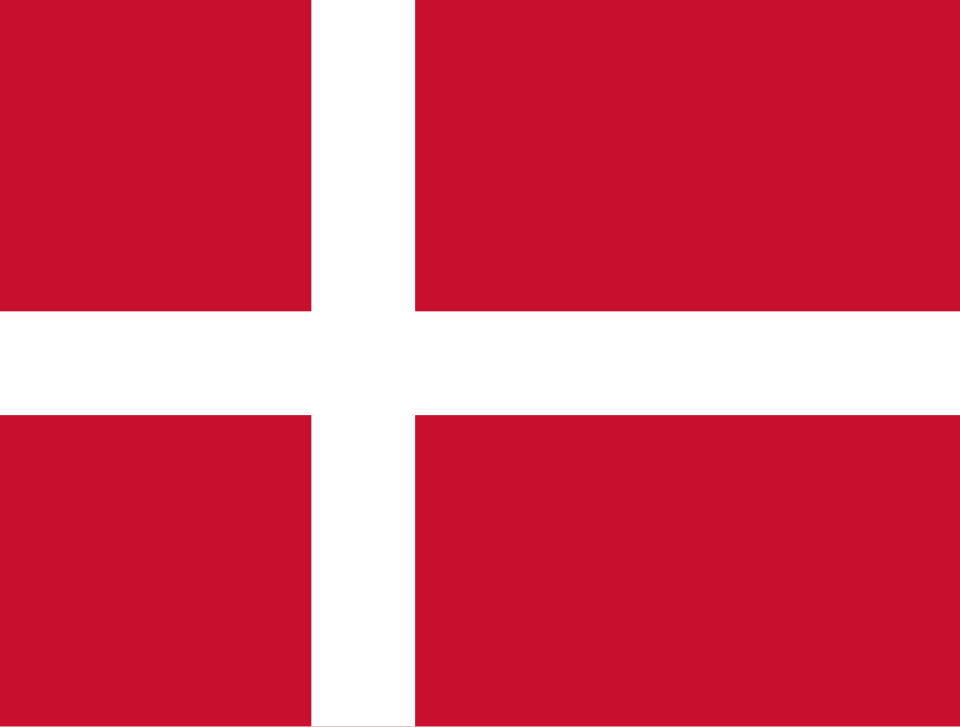
The oldest continuously used national flag is that of Denmark. The current design of a white Scandinavian cross on a red background was adopted in 1625 and its square shape in 1748. In Denmark it is known as the “Dannebrog” or “Danish cloth”.
The white cross is symbolic of Christianity. The Scandinavian cross has its horizontal stripe slightly to the left hand side of the square as you face it.
It is often claimed that the Scottish Saltire can lay claim to a longer continuous use as a national flag. According to the Flag Institute, evidence for both the Saltire and the Dannebrog is fragmentary yet their vexillologists (The People Who Study Flags) believe that the balance of evidence points to Denmark as being older:
St Andrew became Scotland’s patron saint in the 14th century, but there is no clear proof that his Saltire was always shown as a white cross on a blue background from that time.
Flags captured at the Battle of Flodden back in 1513 included saltires, but not white on blue. Records from the same year even mention a red St Andrew’s flag and the flags taken by Cromwell after the Battles of Dunbar and Worcester (1649–50) showed black, red, and white saltires.
However, the white saltire on blue was already seen as a symbol of Scotland by 1606, since it was included in the Union Jack. This suggests that the saltire itself (not its colors) was the main symbol of Scotland in the 1500s. Because the colors were not consistently used (Guinness World Records).
Conclusion
Flags were firstly used for religion purposes and mainly wars to ease the identification of each part side and whom is their enemy.
Flags then evolved into a signal meaning that when lifted a certain representation is giving.
Recently they became more with emphasis on politics. That is a flag usually describe a nation of people within a geographic location that all has things in common, unite them and willing to stand with that country or nation.
Great link that explain descriptively the evolution of The United States of America flag.
References
Guinness World Records. Oldest continuously used national flag. https://rb.gy/qqk68s
Harrison flagpoles. (2024, July 15th). Why are flags important? flagpoles.co.uk/why-are-flags-important/
Impact Flags. (2023, June 23rd). The Origin and Evolution of Flags. impact-flags.co.uk/the-origin-and-evolution-of-flags/
Merriam Webster Dictionary. Flag. merriam-webster.com/dictionary/flag
Ruth & Michael. (2024). Flag. ebsco.com/research-starters/communication-and-mass-media/flag
Tracy Crawford. (2024, October 8th). The History of Flags: From Ancient Symbols to Modern-Day Banners. https://shorturl.at/m5nl0
 Write as you Breathe